
In the world of wellness trends, a quiet revolution is taking place. While regimens promising miracle cures and weight loss come and go, mindful eating has been steadily gaining popularity over the past two decades.
Paleo, keto, and vegan diets (to name but a few) have had their moment in the spotlight. While some people with specific health needs may benefit from such regimens, most find them unsustainable due to their restrictive nature, high cost (requiring specialty foods, supplements, medical tests and tracking tools), and the emotional toll of an all-or-nothing approach. This may explain why there is scant evidence of long-term health benefits of these diets among the broader population.
As the 24-year graph of Google search terms over the past 20 years shows, the search terms paleo (blue), vegan (yellow), and keto (red) all saw spikes before petering out: 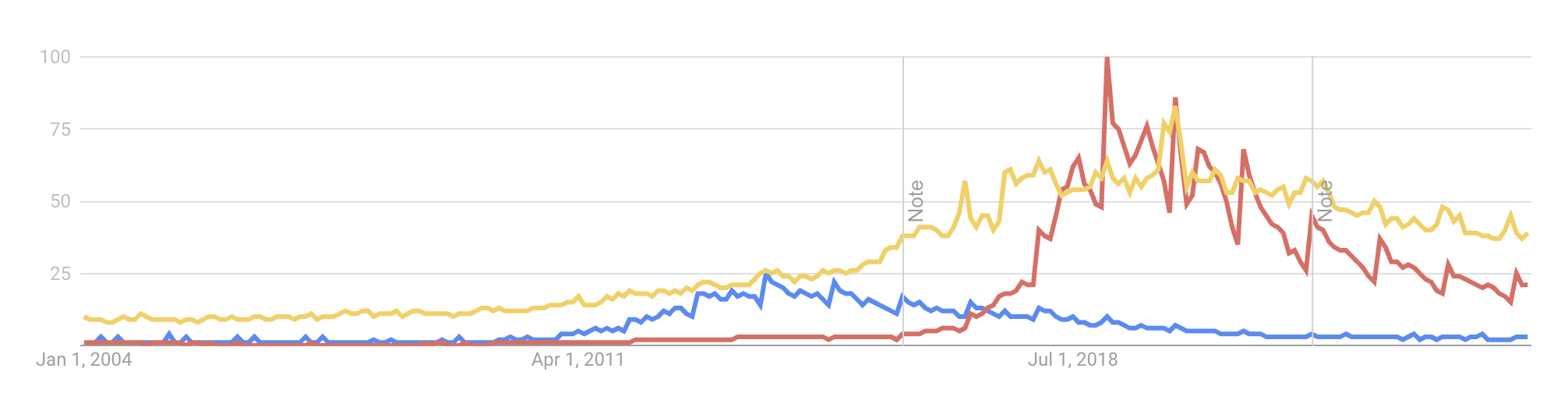
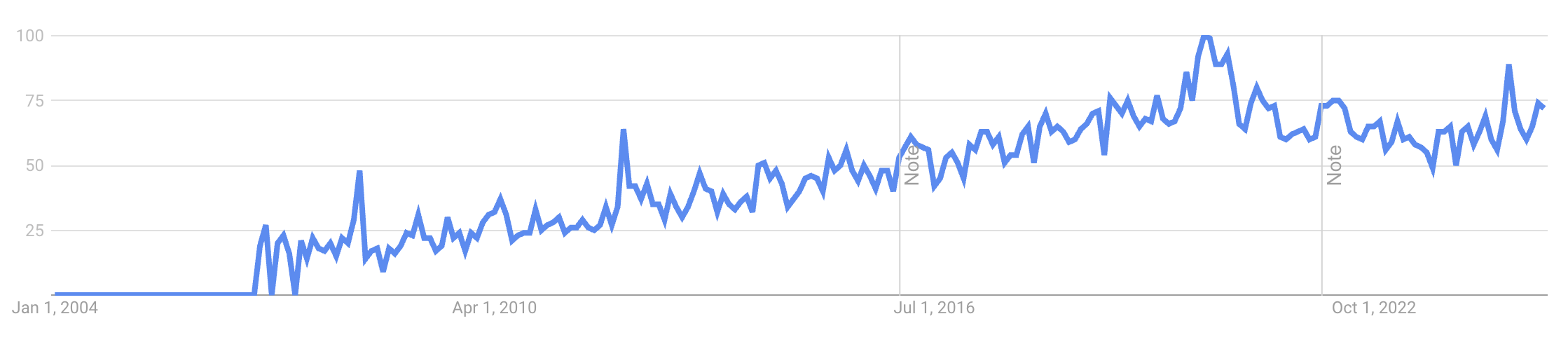
One nutritional approach, however, has slowly but surely gained interest over the past two decades that shows no sign of abating: Mindful Eating:
While mindful eating may not sound as sexy as regimens that promise health miracles, more and more folks fed up with the health-hype rollercoaster are rejecting diet culture’s false promises and are ready to make a fresh start.
What is Mindful Eating?
Simply put, mindful eating encourages individuals to:
- Pay attention to hunger and fullness cues
- Choose foods that are both pleasing and nourishing
- Recognize – and learn to manage – their eating triggers
- Be aware of their responses to various foods
- Eat slowly and deliberately
- Avoid distractions while eating
This approach is simple and doesn’t require expensive supplements, tests, or gadgets. Best of all, it promotes a reconnection with one’s inner wisdom about food and eating.
“You stop focusing on appearance and weight-loss outcomes, and instead, focus on your direct experience and begin understanding your behavioral patterns,” explains Megrette Fletcher, M.Ed., RD CDE, in her book, Core Concepts of Mindful Eating.
While a weight-neutral approach may seem irresponsible in the face of the rise of metabolic disease widely blamed on excess body fat, Fletcher reminds us that health is about more than body weight; it is an ever-changing, complex state that balances the physical, emotional and psychological needs of the individual and differs from one person to the next.
“As a society, we are waking up to the reality that a simple solution like ‘dieting’ can’t possibly address the biological, psychological, societal, cultural, and environmental factors of a person,” states Fletcher.
Documented Health Benefits
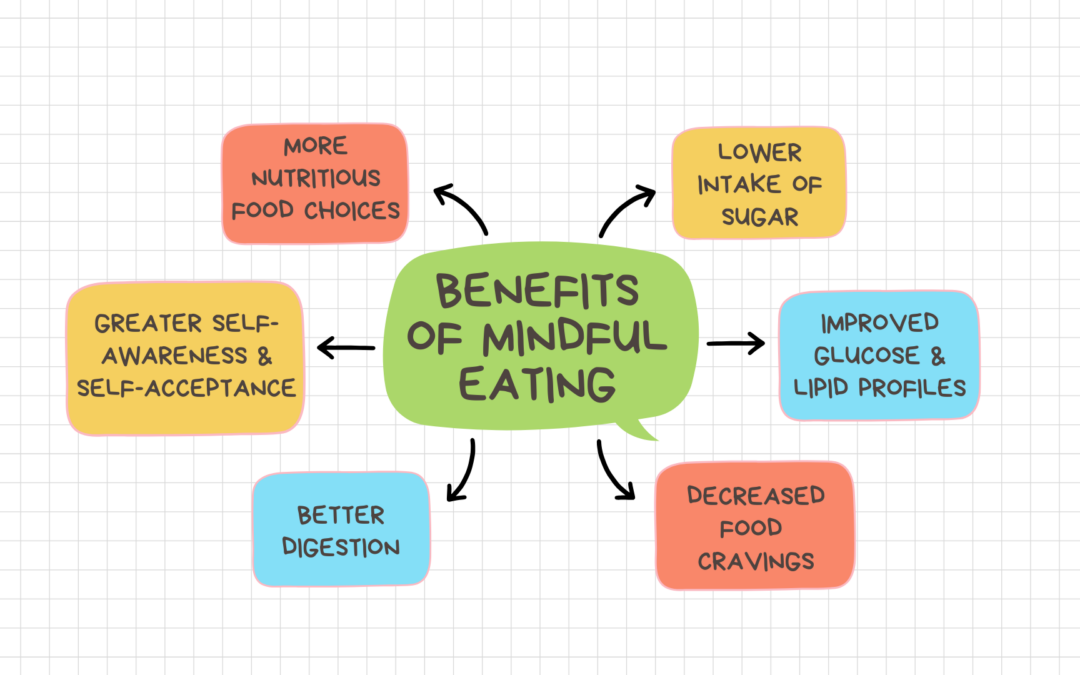
Research on mindful eating is still evolving, but a growing number of studies link mindful eating practices with many measures of physiological and psychological well-being, such as:
- Improved digestive functioning
- Improved glucose and lipid profiles
- Improved eating behaviors such as slowing down the pace of a meal and recognizing feelings of fullness and greater control over eating
- Improved total, LDL, and HDL cholesterol; references here and here
- Potential positive effect on blood pressure and inflammation markers
- Reduced binge eating and emotional eating, decreased food cravings
- Reduced body dissatisfaction & disordered eating urges
- A decreased prevalence of depression
- Improved feelings of self-awareness, self-acceptance, and self-compassion
- More nutritious food choices
- Reduced energy (calorie) intake
- Decreased sugar consumption
- Reduced consumption of salty snacks
In addition to its physical and emotional rewards, “the greatest benefit of Mindful Eating – that it does not cause harm – is woefully underreported,” writes Fletcher. “In fact, the evidence shows that Mindful Eating actually heals the psychological, emotional, and physical harm caused by restrictive eating.” Given that intentional weight loss can carry significant risks, this is a key argument in favor of mindful eating.
Where’s the snag?
Like all good things in life, learning to eat mindfully requires practice, time, and trust. It involves changing your relationship with food and body, challenging your assumptions around food, weight, and health, letting go of quick-fix thinking.
While this may feel awkward at first, the practice becomes easier and more rewarding over time. As awareness develops, you become better equipped to make choices that support your well-being.
Besides – what’s the alternative? Would you rather continue to lurch from one wellness plan to the next, feeling increasingly hopeless in the face of stressful exercise, diet, and lifestyle routines? Or, instead, might you invest that time connecting with your inner wisdom and create a new normal where food is a source of nurturance and pleasure, not anxiety, and where your body becomes something to be cared for and appreciated, rather than punished for its ‘imperfections’? This may take longer than the next fad diet – but as we all know, slow and steady wins the race.
Are you ready to take the plunge? Come on in – the water’s fine.
If you want to shift from a restrictive diet mindset to a self-compassionate, mindful way of eating join one of my 8-week online Am I Hungry? Mindful Eating Group Programs. For more information about this program, please visit this page.