
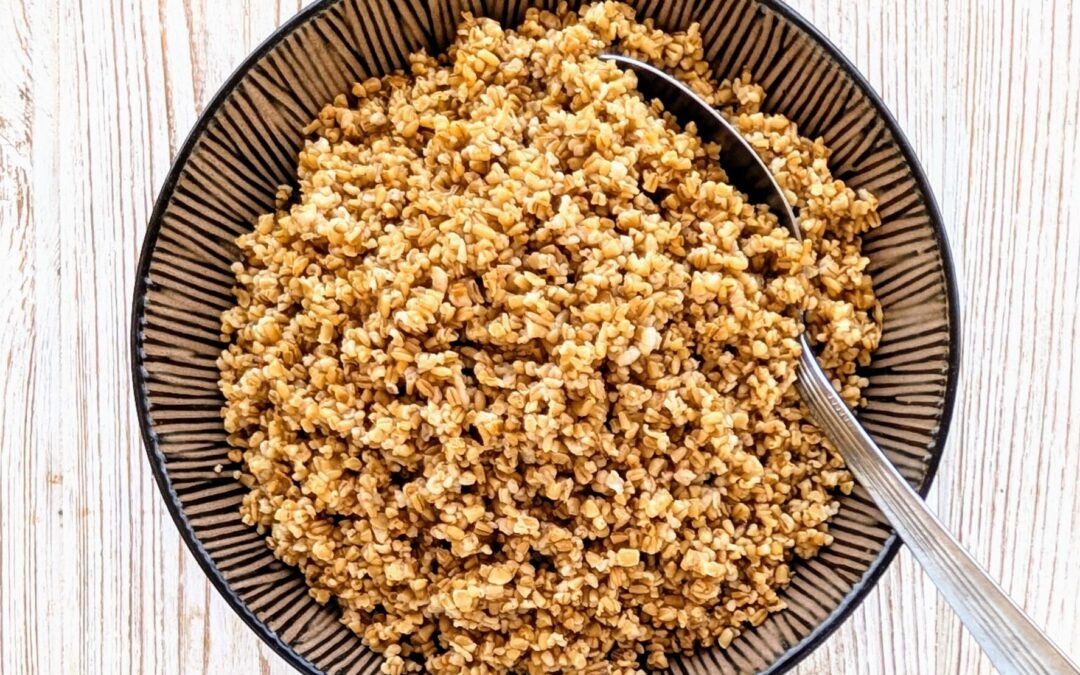
Couscous is a traditional North African food made from small, steamed granules of semolina, which is the hardest part of durum wheat. Despite often being mistaken for a grain, couscous is technically a type of pasta. The traditional process involves sprinkling semolina with water and rolling it by hand to form tiny pellets, which are then dried and steamed until light and fluffy. Today, most couscous is produced industrially, but the basic ingredients remain the same: semolina and water.
Why would you substitute couscous with steel-cut oats? I can think of a few reasons:
- More fiber: Steel cut oats contain twice as much fiber as couscous; fiber supports healthy intestinal transit, helps manage cholesterol, and keeps you fuller longer. Of note, oat fiber is rich in beta-glucan, a soluble fiber not found in any other grain that’s known for its ability to lower cholesterol and help regulate blood sugar levels.
- Lower glycemic load: Oats digest more slowly, resulting in a gentler rise in blood sugar—beneficial for people with diabetes or those seeking steady energy. According to the University of Sydney’s Glycemic Index database, couscous has a glycemic load of around 30, whereas that of steel-cut oats is around 10.
- More nutrients: Since they undergo very little processing, steel cut oats are rich in protein, iron, and antioxidants (including avenanthramides that are thought to support vascular health and may help lower blood pressure), making them a nutrient-dense alternative.
- Gluten-free option: While couscous contains gluten, steel cut oats are naturally gluten-free (if you have celiac disease, look for certified gluten-free oats to avoid cross-contamination).
- Versatility: Fluffy-cooked steel cut oats have a chewy, nutty texture similar to whole grains or brown rice, making them a satisfying substitute in savory dishes, salads, and even stir-fries.
I love having a tub of fluffy-cooked steel cut oats (or oat groats — see this recipe) in my fridge or freezer so I can rustle up at a moment’s notice:
- Grain bowls combining oat couscous, legumes, vegetables and a protein topping
- Tabbouleh (Mediterranean herb & cracked-wheat salad)
- Vegetarian patties (mix couscous, lentils & raw egg, flavor with onion, garlic & herbs, fry in olive oil)
- A stir-fry substituting rice with oat couscous
- Or simply serve them alongside “saucy” dishes like Chicken Paprikash, Tagine, Greens & Beans in Creamy Peanut Sauce, etc. (See my “Soups & Stews” recipes.)
Fluffy Steel-Cut Oat "Couscous" (Instant Pot)
Servings: servings (1/2 cup each)Calories: 148kcalA tasty, nutritious addition to grain bowls, stews, stir fries, and morePrint RecipeEquipment
- Instant Pot
Ingredients
- 1 tbsp olive oil or butter
- 1 cup steel-cut oats rinsed in 3-4 changes of water until the rinsing water is clear, then drained in a sieve
- 1⅛ cup water i.e., 1 cup + 2 tbsp
- ½ tsp salt
Instructions
- Preheat the Instant Pot over medium-high. Warm the oil or melt the butter.
- Add the rinsed, drained oats and stir well to coat the grains with the fat. If desired, cook for 4-5 minutes to lightly brown the oats (for a slightly "toasty" flavor).
- Add water and salt, lock the lid and program to PRESSURE, HIGH for 3 minutes. Once the cooking time is up, let the pressure release naturally (10-15 minutes). Unlock the lid and fluff the grains with a fork. Let sit for 4-5 minutes without a cover to let some residual moisture evaporate.
- The oat "couscous" is ready to use.
Notes
If you don't have an Instant Pot or pressure cooker, you can make steel cut oat couscous on the stovetop in a regular pot. As above, warm oil/melt butter, add drained oats, and add water & salt. Bring to a boil, then cover and cook on low for 10 minutes. Remove from heat but leave the lid on for another 10 minutes before fluffing with a fork as above.Nutrition
Serving: 0.5cup | Calories: 148kcal | Carbohydrates: 21g | Protein: 5g | Fat: 5g | Saturated Fat: 1g | Polyunsaturated Fat: 0.3g | Monounsaturated Fat: 2g | Sodium: 235mg | Potassium: 0.1mg | Fiber: 4g | Calcium: 18mg | Iron: 1mg