
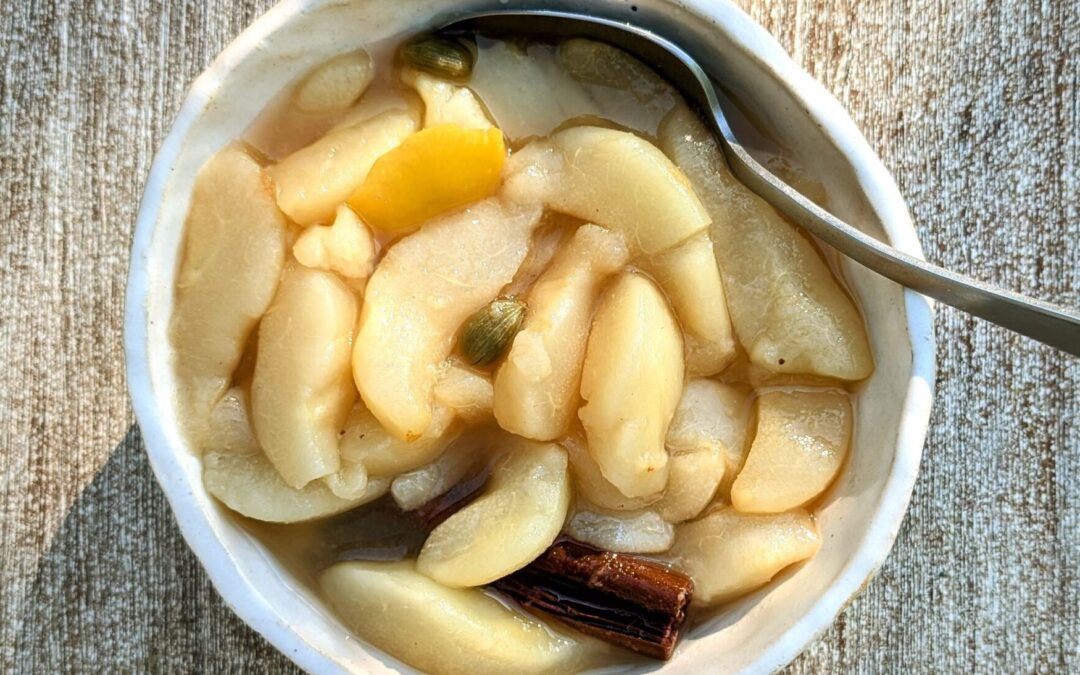
There was a time, not so long ago, when dessert was as simple as a bowl of fruit slices gently poached in a fragrant syrup. A few slices of pear, a handful of plums, or a cluster of apples gently simmered with lemon peel, a cinnamon stick, or a hint of vanilla were enough to end a meal on a note of quiet sweetness. Those were the desserts of my childhood.
For decades, fruit compotes appeared at family tables, celebratory dinners, and on hospital trays—humble, nourishing, and deeply satisfying. In the past 40 years, though, this tradition has been eclipsed by the rise of industrial desserts—velvety supermarket cheesecakes, molten lava cakes, neon-colored ice creams studded with candy. Compared to these dopamine-bombs, a bowl of stewed fruit seems understated, almost too modest to compete.
And yet, a simple compote of poached pears has a great deal to offer. From a nutrition perspective, gently poached fruit is easier to digest, especially for people recovering from illness or living with fragile immune systems. With only a few ingredients—fruit, a little water or juice, perhaps a thread of honey or maple syrup—it is lighter in calories, minimally processed, and much more likely to encourage regular fruit consumption than raw fruit left lingering in the fruit bowl.
The benefits extend beyond nutrition. There is a quiet, emotional comfort to spooning up fruit infused with star anise, ginger, or citrus peel. Poached fruit requires us to slow down, taste carefully, and notice the subtle layering of flavors—a gentle practice in mindfulness at the table. Having a few jars waiting in the refrigerator also lowers stress: dessert is ready, whether for company or a hectic weekday evening.
Compote is practical, too. Seasonal fruit can be transformed into something luscious with minimal cost, especially during peak harvests when pears, plums, or rhubarb are abundant. Better still, a pot of fruit simmered at home demands far less of the planet than factory-made desserts wrapped in plastic and carted across long supply chains.
It may not explode with the drama of a lava cake, but a spoonful of poached pear (or plum—pictured below) is a quieter kind of pleasure—one that nourishes body, calms the mind, and reconnects us with the elemental joy of fruit in its simplest form.
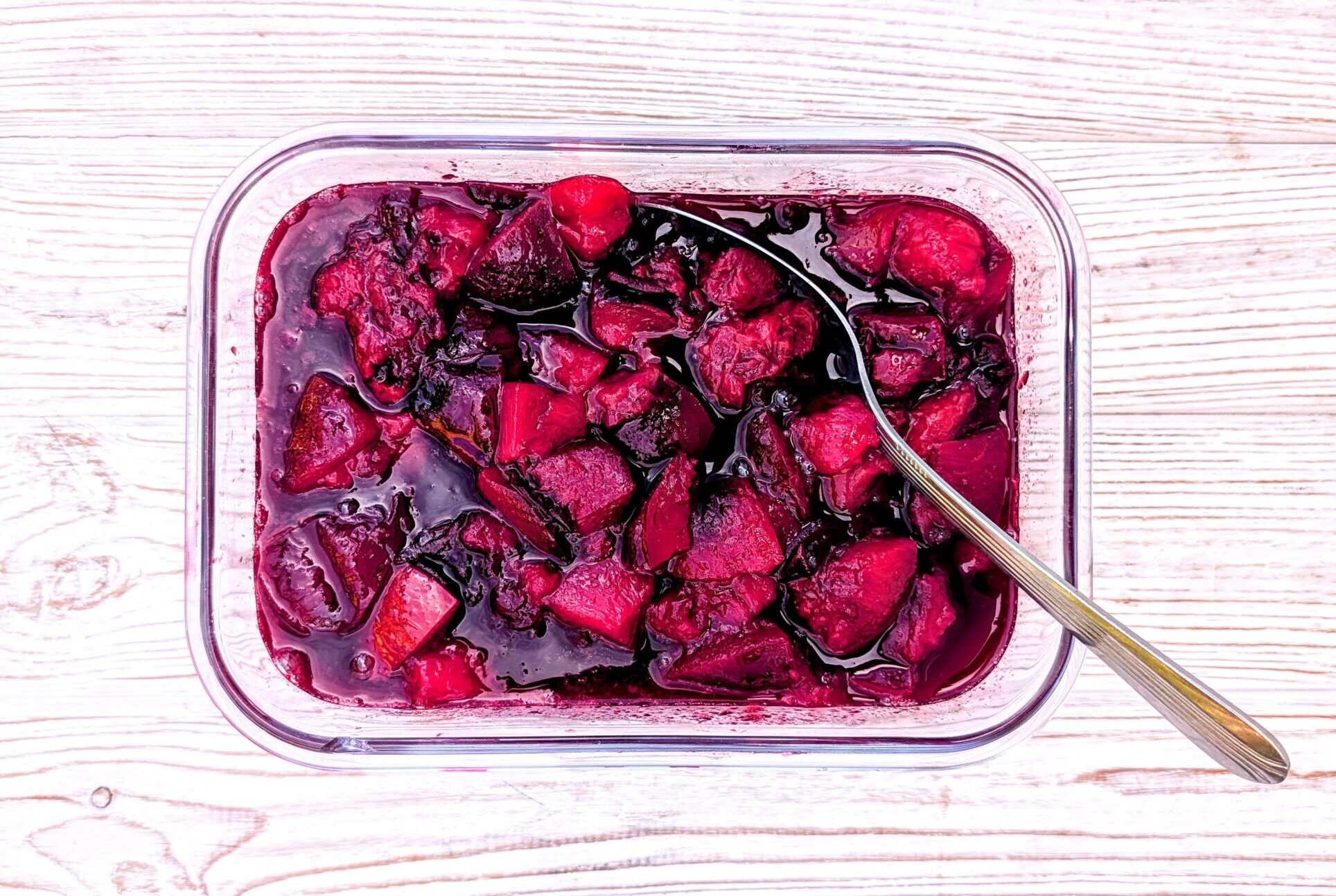
Hard, dry plums become juicy flavor-bombs when given the compote treatment. Here’s a batch I made recently following this recipe (omitting cardamom but using a cinnamon stick and three anise stars). I spoon them over my morning oatmeal, enjoy them with Greek yogurt as an afternoon snack, or savor them as a light, refreshing dessert. For information about plums’ nutritional benefits, check out this post.
“But doesn’t cooking kill all the nutrients?”
… is an objection I expect to hear. Rest assured, dear reader: poaching fruit gently in water or juice preserves most of its nutrients, especially fiber, minerals, and antioxidant compounds, while enhancing digestibility and flavor.
Poaching does lead to some loss of water-soluble vitamins—particularly vitamin C and certain B vitamins—which can leach into the cooking liquid. However, the nutrient loss is generally modest if the poaching time is brief and temperature low, and using the cooking liquid for serving or syrup helps retain more nutrients. Most minerals, fiber, and flavonoid antioxidants (especially in the peel, if left on the fruit, as when poaching plums) remain robust after mild poaching.
Serving suggestions
In addition to enjoying them as-is, these pears go with (almost) anything. Try serving them:
- over breakfast oatmeal or creamy rice pudding,
- on Greek yogurt,
- with vanilla or cinnamon ice cream,
- as a side to meat dishes like duck breast or roast pork
- on a charcuterie board, alongside sharp, salty cheeses like Roquefort, Parmesan or Pecorino
- in spicy winter salads (like arugula, frisee or radicchio) alongside walnuts and goat cheese (so elegant!)
- as a simple appetizer: top toasted sourdough baguette slices with ricotta cheese, thinly sliced poached pears, and pieces of salty prosciutto. A drizzle of honey and sea salt adds a finishing touch.
Simple Poached Pears
Ingredients
- 2 pounds pears peeled, cored and cut into slices or chunks
- 2 cups poaching liquid I usually use water mixed with another liquid, like 1-2 tbsp of lemon, tart cherry or pomegranate juice, or 50:50 water:orange juice or white dessert wine. For a dramatic dessert, red wine is great. (The alcohol cooks off.)
- 2 tbsp sweetener I use maple syrup; sugar or honey work great, too. Use more or less, depending on the desired level of sweetness.
- 1 3-inch strip of lemon peel thinly pared with a vegetable peeler; untreated
- 1 cinnamon stick
- 5-6 cardamom pods they should ideally be green for freshness
- 1 tsp fresh ginger finely grated on a Microplane zester; use more or less, as desired
Instructions
- Pour the poaching liquid into a medium saucepan. Add sweetener, lemon peel, and spices. Over medium heat, bring to a boil and cook for 1-2 minutes to release the spices' flavors.
- Add the pears and bring back to a boil. Cook over medium-low heat for a few minutes until the pears reach the desired degree of doneness (some like them silky soft, others prefer them al dente.)
- Using a slotted spoon, gently lift the pears out of the saucepan and transfer them to a serving bowl or, if not planning to eat them right away, to a non-plastic storage container.
- Increase the heat to medium-high and cook the poaching liquid until it's reduced by about half (about 10 minutes); this creates a slightly syrupy consistency and concentrates the flavors. Pour the syrup over the fruits; I usually leave the spices in the mix, but feel free to remove them if you prefer. Let infuse for at least 10 minutes before serving.
- Poached pears taste delicious warm, at room temperature, or chilled. Since they have been cooked, they keep well in the fridge for up to a week in a tightly sealed container.