
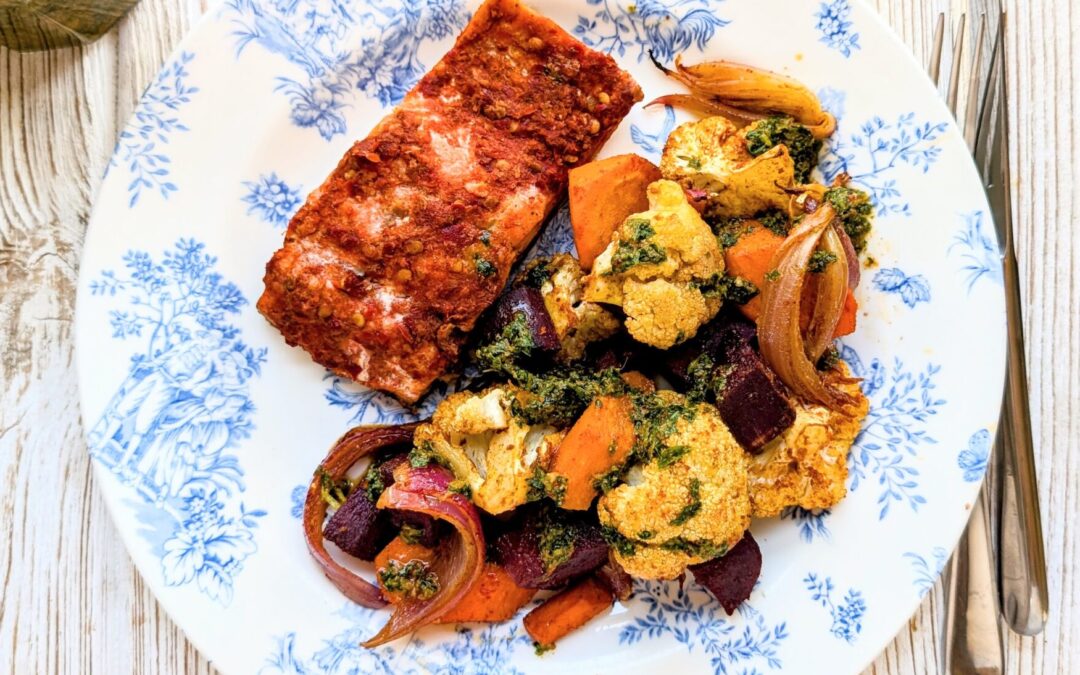
There’s something deeply nourishing—both physically and emotionally—about a meal that is as vibrant and aromatic as it is nutrient-rich. I demonstrated this Moroccan-inspired sheet-pan dinner at my recent Boulder Community Health Cancer Center webinar on optimizing immune function as it highlights how deliciously simple it can be to support the body’s natural defense systems with the help of good, nutritious food.
Our centerpiece is harissa-roasted salmon, adapted from a New York Times recipe and infused with the bold, smoky heat of North African spices. The crust, combining harissa, orange zest & juice, ginger, garlic & honey, supplies deep, warm flavors and a wealth of anti-inflammatory compounds while salmon delivers omega-3 fatty acids—anti-inflammatory powerhouses that help regulate immune responses and support cardiovascular and brain health. Each fillet is nestled amid a medley of colorful vegetables: purple sweet potato, cauliflower, carrots, and red onion, all tossed with extra-virgin olive oil and ras el hanout (a delicious Moroccan spice mix). Together, they create a harmony of sweet, savory, and spiced flavors while offering potent immune and cancer-protective nutrients.
I didn’t choose the vegetables & herbs at random; each supplies a wide range of immune-nourishing, cancer-protective nutrients:
- Purple-fleshed sweet potatoes are rich in anthocyanins, especially cyanidin and peonidin derivatives, which show antioxidant, anti‑inflammatory, and anti‑proliferative effects in cell and animal models of colorectal and other cancers. These anthocyanins can promote cell‑cycle arrest and apoptosis in cancer cells and help protect DNA from oxidative damage. (Purple sweet potatoes recently appeared on my radar after listening to an interview with Mayo Clinic oncologist Dr. Dawn Mussallem, who just can’t stop raving about them in this delightful Instagram reel. 🙂 )
- Cauliflower, as a cruciferous vegetable, contains glucosinolates that are converted to isothiocyanates and indoles, compounds linked to decreased inflammation and activation of detoxification enzymes that deactivate carcinogens. These compounds can turn on tumor‑suppressor genes, slow abnormal cell growth, and promote apoptosis in cancer cells in experimental models.
- Carrots provide carotenoids (like beta‑ and alpha‑carotene) and unique polyacetylenes such as falcarinol and falcarindiol, which are being investigated for anti‑cancer activity. Observational data suggest regular carrot intake is associated with lower overall cancer risk, likely related to these phytochemicals rather than isolated beta‑carotene supplements.
- Red onions are concentrated sources of quercetin, a flavonoid with antioxidant and anti‑proliferative effects, and also contain anthocyanins that appear to enhance quercetin’s free‑radical scavenging capacity. Extracts from quercetin‑rich onions have been shown to trigger apoptosis and reduce viability in various cancer cell lines in laboratory studies.
- Scallions (green onions) are rich in organosulfur compounds that can enhance carcinogen detoxification, slow tumor growth, and promote apoptosis in experimental models. Animal and observational data link higher intake of Allium vegetables (including scallions) with reduced risk of certain cancers, such as colon and prostate.
- Cilantro (coriander leaves) contains antioxidants and polyphenols that help reduce oxidative stress and inflammation, processes closely tied to cancer development. Extracts of Coriandrum sativum have shown the ability to slow proliferation, migration, and invasion of cancer cells and reduce lung metastases in animal models.
- Extra virgin olive oil: I tossed all these in olive oil, the cornerstone of Mediterranean eating, which provides polyphenols and vitamin E–related compounds that have antioxidant, anti‑inflammatory, anti‑proliferative, and pro‑apoptotic effects in experimental cancer models. Higher olive oil intake in observational and Mediterranean diet studies is associated with lower overall cancer risk, especially breast and gastrointestinal cancers.
The result is a one-pan meal that feels both comforting and empowering: deeply flavorful, visually stunning, and brimming with ingredients that help the body thrive.
Variation: People eating vegan and vegetarian diets could replace the fish with baked tofu; this would benefit from being marinated overnight in the harissa-orange marinade.
Sheet-Pan Harissa-Roasted Salmon & Spiced Vegetables
Equipment
- 1 large sheet pan mine's 12 by 19 inches; alternatively, two smaller sheet pans that fit in your oven side-by-side
Ingredients
Harissa-Crusted Salmon
- 24 oz skin-on salmon wild caught (leaner) or farmed (fattier); cut into 4 equal sections. Veg(etari)an version: substitute with baked tofu -- whole or cubed and marinated for several hours.
- a squeeze of lemon juice
- ½ tsp salt
- ½ tsp black pepper freshly ground
- 2-3 tbsp harissa paste I love Zwita Foods' spicy, smoky, or mild harissa options
- 1 tbsp ginger finely grated; I use a Microplane zester
- 1 clove garlic finely minced or grated
- ½ tsp orange zest from an untreated (organic) orange; zested
- ¼ cup orange juice from about ½ orange -- use the orange you zested)
- 1-2 tsp honey to taste
Roasted Vegetables
- 1 small head cauliflower stem & green outer leaves removed; broken into bite-sized florets (larger florets may need to be halved or quartered)
- 2 medium purple-fleshed sweet potatoes peeled and cut into ½-inch cubes (no need to peel if they're fresh; just scrub under running water with a soft vegetable brush)
- 1 large red onion peeled and cut from root to stem (this creates firmer, less pungent slices that hold shape well for cooking, because it ruptures fewer cells, releasing less tear-inducing gas)
- 2 medium-large carrots cut into ½-inch slices (no need to peel if they're fresh; just scrub under running water with a soft vegetable brush)
- 2 tbsp olive oil
- 2-3 tsp ras el hanout Moroccan spice mix (more on this here); this one's the brand I used; this one's delicious too
- ¾ tsp salt
- 3 tbsp scallions thinly sliced, both white & green parts
- ¼ cup cilantro roughly chopped (both tender stems & leaves)
Instructions
Salmon
- Heat oven to 450℉. Lay salmon on a plate, pat dry with paper towel, sprinkle with lemon juice, season with salt and pepper.
- In a shallow bowl, whisk together harissa, ginger, garlic, orange zest & juice, and honey. Spoon the mixture over the flesh and sides of the fish, and let marinate at room temperature.
Vegetables
- Line the baking sheet with parchment paper.
- Combine all the chopped vegetables in a large mixing bowl. Toss with the olive oil and scatter with ras el hanout and salt.
- Arrange them on the sheet pan in one layer and roast for 15 minutes (until the potatoes and carrots are almost cooked through).
- Toss the vegetables with a spatula and create four spaces on the pan for the salmon fillets. Add the salmon skin-side down, and roast until the fish is opaque and cooked through, about 8 minutes more.
- Scatter cilantro and scallions over everything, and season with flaky salt. Alternatively, drizzle with chermoula, a delicious Moroccan herb & spice emulsion (pictured in this recipe).